What SPFW N61 Says About the New Language of Brazilian Fashion
From craftsmanship and regional memory to experimental tailoring and cultural references, Brazilian brands are building a fashion language that feels increasingly confident on its own terms.
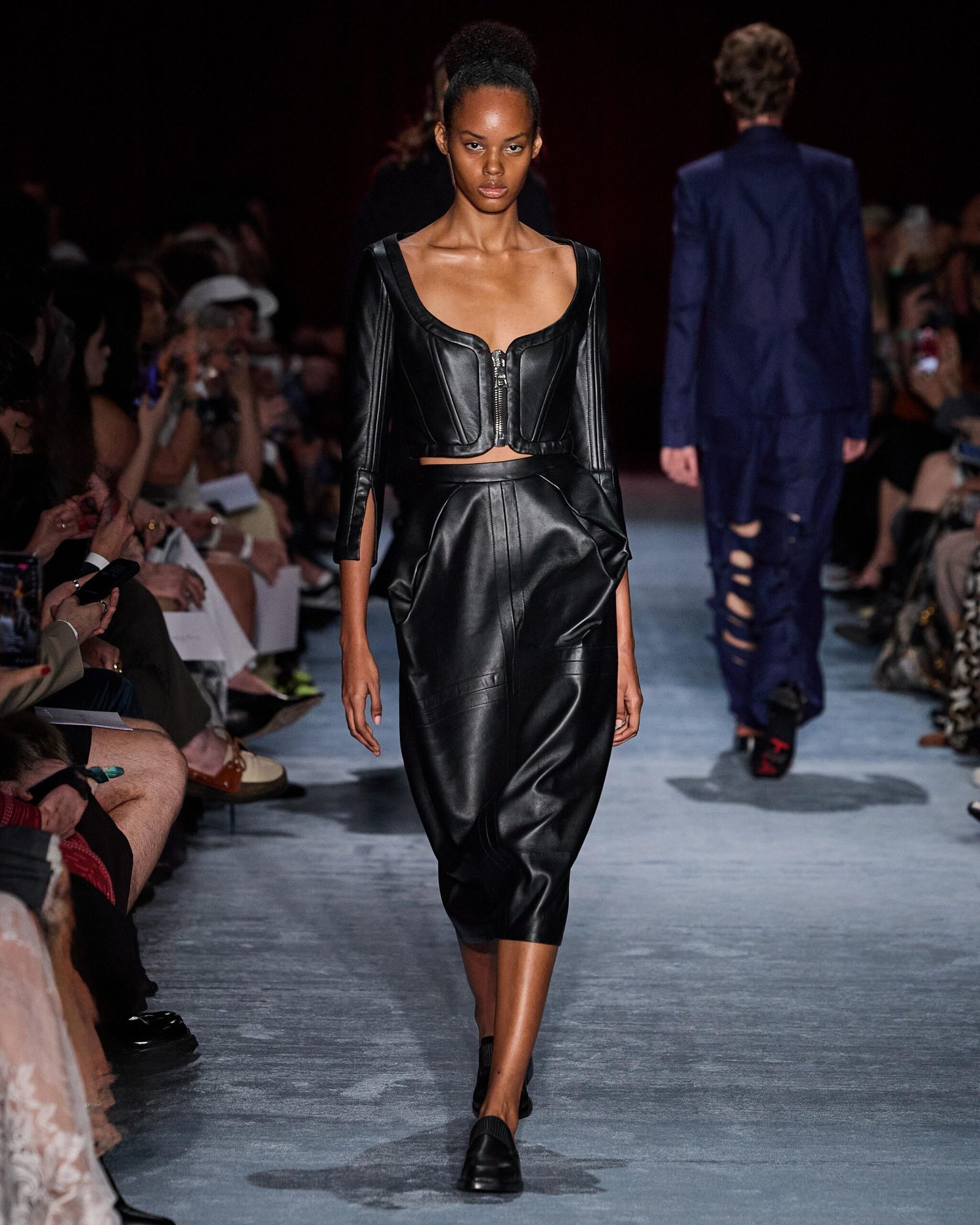
There was no single idea of Brazilian fashion at SPFW N61. That may have been its most interesting message.
Across the latest edition of São Paulo Fashion Week, which closed on October 18, 2026, as the event celebrated three decades of Brazilian fashion, brands looked inward without becoming insular. The references ranged from the dry landscapes of Brazil’s Northeast and the cultural memory of Rio de Janeiro to Pará modernism, ocean imagery, Japanese craft and the codes of tailoring, club culture and upcycling.
What connected many of them was not a shared aesthetic. It was confidence.
Designers used personal histories, local techniques, regional culture and material experimentation to build collections with highly individual vocabularies, without chasing an easily exportable image of Brazil.
For an international audience, that distinction matters. Brazilian fashion becomes more interesting when it stops being treated as a category defined by tropical colour or resortwear and starts being understood as an ecosystem of very different creative voices.
Memory and territory become design
At Catarina Mina, founded in Ceará, the collection Bonito pra Chover looked at one of the most emotionally charged events in Brazil’s semi-arid Northeast: rain.
The transformation of the caatinga after long dry periods became a language of texture. Crochet, straw, net weaving and different lace-making techniques were used alongside embroidery and lightweight fabrics. The brand expanded its network of artisans beyond Ceará to Rio Grande do Norte and Piauí, turning regional knowledge into part of the collection’s construction.
It is a revealing example of how Brazilian craft is evolving within contemporary fashion. The handmade element is not there to signal nostalgia. It is part of the design system itself.
Santa Resistência, led by Mônica Sampaio, approached cultural memory from another direction. Its collection moved between Shakespeare’s Othello and the Brazilian reinterpretation Otelo da Mangueira, bringing Rio’s samba culture into the conversation through green and pink, floral embroidery and references connected to Mangueira.
Culture here works as source material, not decoration.
The same applies to Normando. Designers Marco Normando and Emídio Contente turned to the work of Ismael Nery, the modernist painter born in Pará, to disrupt the label’s established black-and-white vocabulary. Blues, browns and reds entered its tailoring and shirting, alongside trompe-l’oeil effects, transparencies, organza and hand painting.
Three very different brands, three different regions and histories. None attempts to explain Brazil through a single image. That plurality may be the point.
Craft is meeting experimentation
Brazilian fashion’s new language is also emerging from the collision between established techniques and less predictable forms of construction.
Few designers have challenged tailoring in Brazil as consistently as João Pimenta. At N61, classic black-tie references were dismantled and reconstructed. Ties became halter tops; shirts, waistcoats and jackets were combined so that the mechanics of tailoring became visible in the finished garments. Pimenta exposes the structure of tradition and then rearranges it.
At Aluf, designer Ana Luiza Fernandes used the sea as a material vocabulary. The collection Sorte de Pescador translated scales, fishing nets, boats, waves and sailors’ knots into volumes, embroidery, accessories and surface treatments. Natural textures and pale tones were interrupted by ocean blue and indigo denim. The reference was recognisable, but the collection avoided costume: what mattered was how an image could become construction.
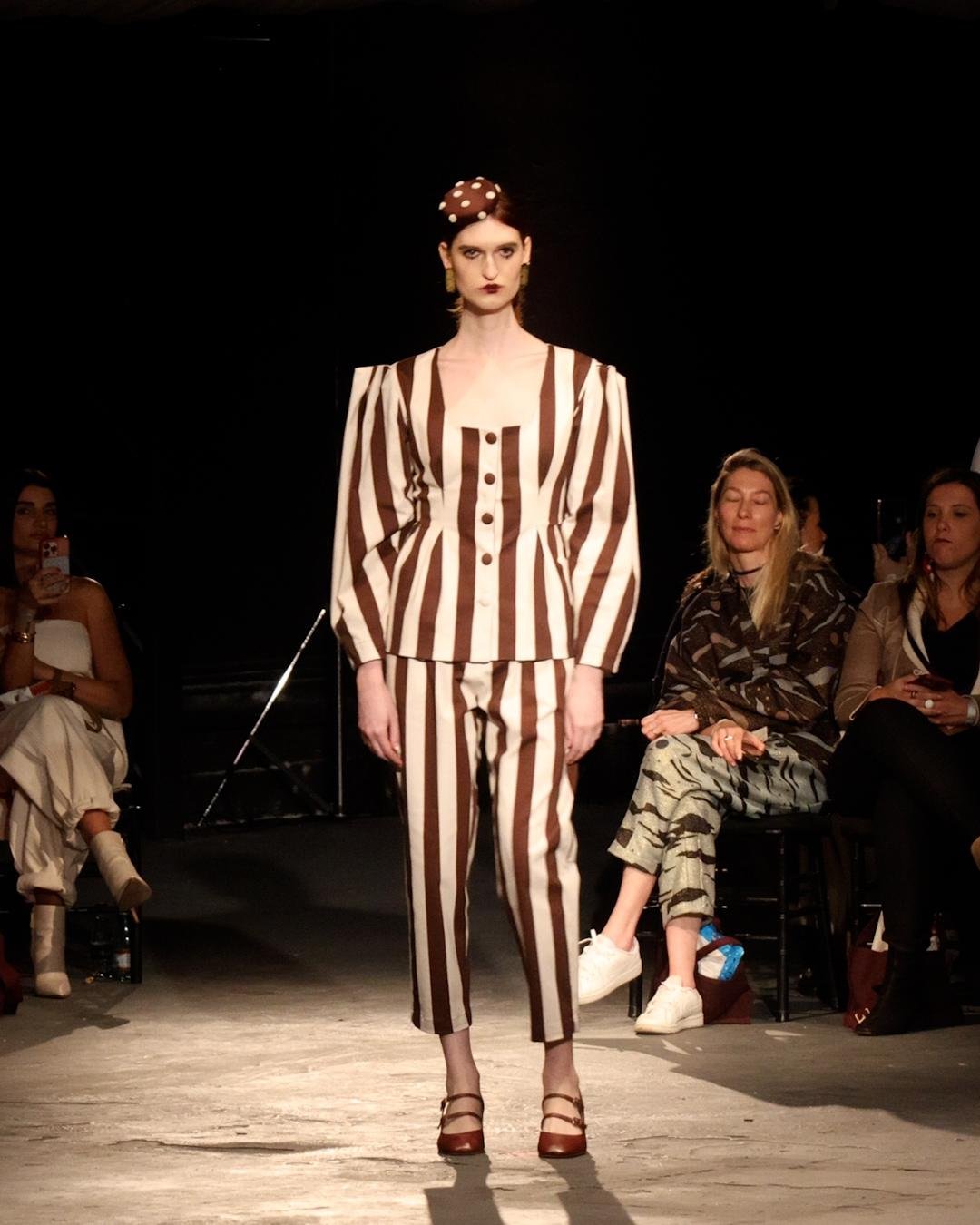
Uó por Marcelo Sommer found its language in reuse. Lingerie, tailoring, sweatshirts and motorsport T-shirts were recombined through upcycling into hybrid garments. Rather than hiding the previous lives of those pieces, the brand made collision itself part of the aesthetic.
At Hisha, transparencies, corsetry, lace, crystals and beading built pieces of strong visual presence. References to horse riding and geology brought ornament and territory together, with detail as a marker of identity.
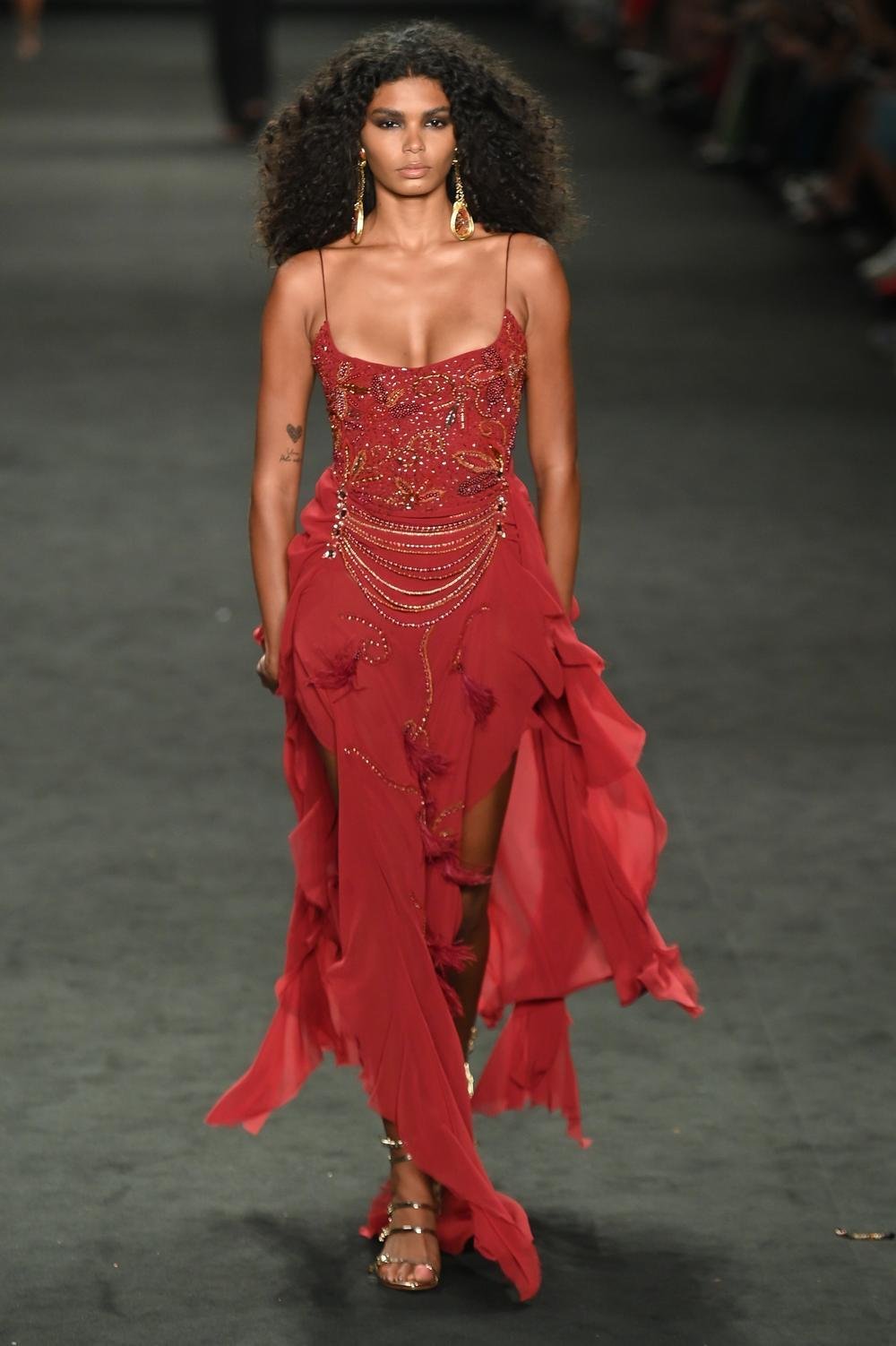
Then there is Handred, whose Vapor em Curso collection looked to Japan. Designer André Namitala explored architecture, ceramics, bathing culture and traditional materials, including Nishijin textile, while keeping Handred’s relaxed construction and volume. The interest lies precisely in the absence of literal translation: a Brazilian brand can look outward without abandoning its authorship.
And Herchcovitch;Alexandre, one of the most internationally recognisable names to emerge from Brazilian fashion, again showed how a deeply personal vocabulary can survive decades of change. Fetish, lingerie, club culture, florals, checks and contrasting notions of innocence and sensuality appeared together, a reminder that identity in fashion is often built through repetition, mutation and contradiction.
Beyond the postcard
Taken together, these collections resist a convenient definition of what Brazilian fashion should look like. That resistance is significant.
For years, the international image of fashion from Brazil has been tied to a narrow set of codes: beach, body, colour, heat, exuberance. Those elements remain part of the country’s creative landscape, but they are far from the whole story.
SPFW N61 showed brands working with the sertão and the samba school, modernist painting and Japanese textiles, fishing nets and black tie, upcycling and hand embroidery. The emerging language is not one language at all. It is the freedom for Brazilian brands to be increasingly specific about where they come from, what they reference and how they transform those references.
Perhaps that is the most contemporary form of Brazilian identity in fashion: not trying to look recognisably Brazilian for the world, but becoming confident enough to let the world catch up.